8/17/2024

AOGS2024 - Short Report

Hello! This is Keito~!

Today, I'd like to share my experience at AOGS2024, which took place in late June 2024 in Pyeongchang (平昌/평창), South Korea. AOGS2024 is the annual meeting of the Asia and Oceania Geosciences Union, attracting students and researchers from around the world, with a primary focus on participants from Asia and Oceania. The meeting was held at Alpensia Resort and YongPyong Ski Resort, one of the venues for the 2018 Pyeongchang Winter Olympics.

Alpensia Resort! Welcome~!

YongPyong Ski Resort

2018 Pyeongchang Winter Olympics

At this conference, I primarily participated in the Ocean Science (OS) Section and the Biogeoscience (BG) Section. Although there weren't many presentations specifically related to ecosystems, there were numerous presentations on the carbon cycle and climate change, with several studies utilizing isotopes as proxies for environmental research.

One characteristic of this conference is the focus on studies concentrated in the Asia and Oceania regions. Many presentations were related to research in China, and there were also several studies from Australia and Southeast Asian countries. Additionally, due to the location of the conference, there were a significant number of studies centred on South Korea. Since these study areas share several characteristics with Japan's settings, I firmly believe that we can gain valuable insights and clues for our research from them.

The next AOGS (AOGS 2025) will be held from July 27 to August 1, 2025, at the Sands Expo & Convention Centre, Marina Bay Sands, Singapore. I highly recommend attending the conference to learn about research from nearby regions!

See you ~!


8/16/2024

EGU2024 - Short Report

Guten Tag, hier ist Keito~!

Today, I'd like to introduce my experience in EGU2024, Wien Austria. Here I made a poster presentation related to my otolith research conducted in PUCV, Chile. This conference is the European counterpart of the comprehensive Earth and Planetary Science meeting, attracting geoscientists from around the world, with a focus on Europe. Recently, due to the rising prominence of environmental issues, there has been a notable presence of researchers specializing in environmental sciences.

Conference Centre, Austria Center Wien

The conference proceedings are generally similar to those of other international meetings. Oral presentations are conducted in a hybrid format, allowing participation both in-person and online, so you can join even from Japan. While poster presentations are available only on-site at specific times, the posters are also published online, and questions can be asked through the online platform.

My presentation took place on the final day of the conference. As it was my first time presenting at such a large international conference, I was nervous. However, once I began, I was pleased to see many attendees, and I believe it went very well. It was an honour to have not only researchers and students specializing in otolith studies but also many students working in isotope research, mainly from ETH Zurich, attend my presentation. Thank you very much for perticipation!

My Presentation...

One of the distinctive features of the EGU conference is the variety of networking events. Daily early-career scientist meetups are held, and I participated in these as well. Additionally, during dinner times, various themed networking events take place, where you can interact with students and researchers while enjoying light snacks and plenty of beer!

Beer, Schnitzel, and ....

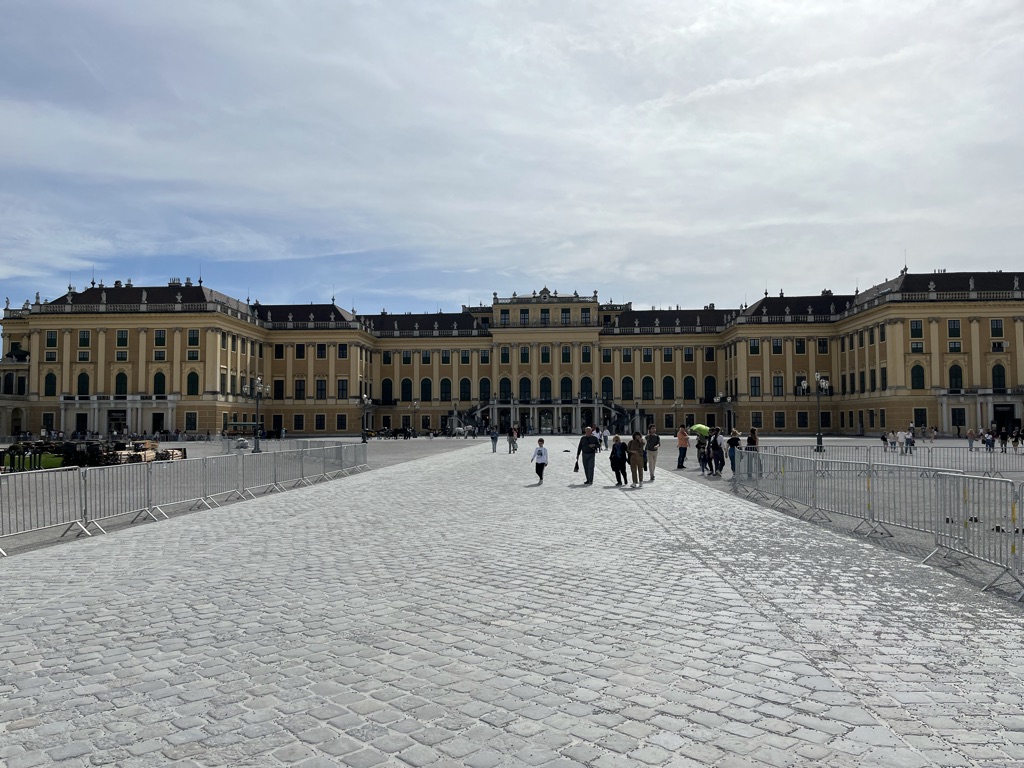
Although it isn't directly related to my research, Wien is a city rich in history and a wonderful place to visit. As a former imperial capital, it boasts many beautiful architectural landmarks, making it an excellent destination to explore during conference visits.

Hofburg Imperial Parace
シェーンブルン宮殿
Oper(オペラ)

In addition to this, there are many beautiful sights in Austria~! (I travelled around before EGU)
Linz
Hallstatt
Hallstatt 2
Video Hallstatt
Beautiful ALPS ~
von voyage !

Thank you for reading~!

What...?! (@ Hotel Sacher)

------------

I was abroad from August last year until the latter half of April this year, receiving various forms of support during my stay. Below are links to reports detailing my experiences in the different locations I visited:

1. UNIS, Longyearbyen, Svalbard, Norway (Aug.2023 - Sep.2023)
→ https://jmsfmml.or.jp/j/activity/hidaka/report_r05_aonuma.pdf [jp]
→https://lams-yokoyama.blogspot.com/2024/08/my-stay-in-unis-university-centre-in.html

2. 7th International Otolith Symposium, Chile (Oct. 2023) 
→ https://lams-yokoyama.blogspot.com/2023/12/blog-post.html 

3. PUCV, Chile (Oct. 2023)
4. AWI, Germany (Oct./Nov. 2023 - Feb.2024)
5. UNIS, Longyearbyen, Svalbard, Norway (Feb.2024 - Mar.2024)
→ https://www.s.u-tokyo.ac.jp/ja/IGPEES/files/report/2023/aonuma.pdf [jp/en]
→https://lams-yokoyama.blogspot.com/2024/08/my-stay-in-awi.html (for AWI)
→https://lams-yokoyama.blogspot.com/2024/08/my-stay-in-unis-university-centre-in.html (for Winter UNIS)

6. EGU General Assembly 2024, Wien, Austria (Apr.2024)
→https://lams-yokoyama.blogspot.com/2024/08/egu2024-short-report.html

These lists are also working for this article's reference ~ Thank you ~

------------

My Stay in UNIS (the University Centre in Svalbard), Longyearbyen, Svalbard, Norway

 Hi, everyone ~! 

Find Tokyo or your hometown~! (Unfortunately, no Kashiwa there)

This is Keito Aonuma. In this article, I'd like to report my stay in Svalbard twice last year! Since the report in IGPEES is approved, I can also write my article here.

Where is Longyearbyen...?

City of Longyearbyen in Summer!

Longyearbyen is a small city located in Svalbard, Norway. Positioned in the High Arctic at 78°13′N, 15°33′E, it is known as the world's northernmost city. While there are other small settlements farther north, they are all temporary and primarily serve research or military purposes.

Svalbard, including Longyearbyen, is a unique place in Norway. The absence of indigenous populations and the late human settlement have contributed to its distinctiveness. Although it is under Norwegian sovereignty, there are no restrictions on foreign economic activities or education. Additionally, while Norway holds sovereignty, some mines are operated by other countries, and until a few years ago, there was even a sushi restaurant run by Japanese sushi shokunins.

0:30 am in August. I'm not joking.

Since Longyearbyen is located in the High Arctic, the city experiences long periods of polar night and midnight sun. Both phenomena last for approximately four months, causing significant seasonal variation for the residents. Summer temperatures (in June) are typically in the 10°C range, while the long winter can see temperatures drop to -30°C. Fortunately, being an island surrounded by the sea, it doesn’t get as cold as Siberia.

Another characteristic of Longyearbyen is the risk of encountering polar bears. Despite their seemingly gentle appearance, polar bears are very large and more dangerous than brown bears. As a result, carrying a rifle is mandatory when leaving the city (one rifle per several numbers of people is sufficient, not per person). At UNIS, there is also a rifle course for those taking land routes outside the city for fieldwork.

1st Stay: AB-321 Ecology of Arctic Marine Benthos (2023 Summer)

R/V Helmer Hanssen.

My first course focused on the benthic ecology of the Arctic. This one-month short-term course was divided into two parts: lectures and a research cruise. The lectures, which lasted approximately ten days, covered oceanography and marine ecology in the Svalbard region. During the nine-day research cruise on R/V Helmer Hanssen, coursemates and I sailed in the Arctic Ocean up to more than 80°N to collect benthic and other marine organisms from Arctic environments.


The lectures were conducted in an omnibus style. Experts from various fields of Arctic study visited UNIS to give classes related to their areas of expertise. Some classes used a traditional lecture format to impart knowledge, while others were interactive. Students were required to read papers in advance and engage in discussions. At times, students had to critique these papers from various perspectives, including methodology, sample settings, figures, and, of course, the discussions and conclusions. It was challenging for me, but I was able to develop a critical mindset.

End of Glacier....

The research cruise took place in mid-September, covering the west and north coasts of Svalbard. At four or five locations along the route, we collected samples of benthic animals and fish for ecological research. Additionally, we attempted to use ROVs to directly monitor the habitats, but unfortunately, this effort was not as successful as we had hoped. The collected samples were taxonomically analyzed and stored for further research. This process was quite challenging for me, as it involved using numerous identification keys to determine the species of each sample. For a beginner like me, it was demanding, but I managed to catch up.

After the cruise, we completed the remaining taxonomy work and prepared for our presentation and class. The presentation felt somewhat like a defence of our research project, but thanks to the rehearsals with our instructors, it was highly successful.

Bird inside

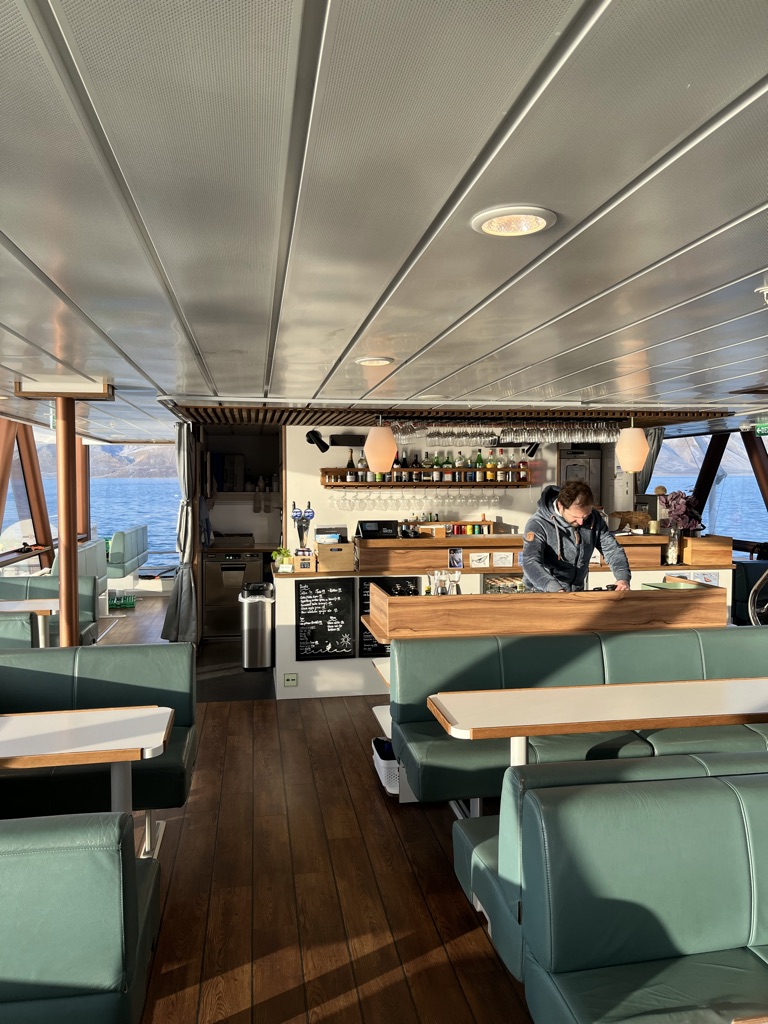
Additionally, we made another presentation on the sightseeing ship Bird to the public. This was my first experience with outreach. During the preparation process, I had the opportunity to engage in discussions with other students about effective communication strategies, which taught me valuable outreach techniques.


Aurora

2nd Stay: AB-333 AB-333 Freshwater Ecology of Arctic Lakes and Ponds (2024 Spring)

My first course focused on the limnology of the Arctic. This one-month short-term course did not include overnight fieldwork; instead, lectures and fieldwork were conducted concurrently. The course included both land-based fieldwork and snowmobile rides, which required training in rifle shooting and fieldwork operation. I remember successfully hitting the centre of the target during the rifle shooting training. Unfortunately, without a driving license, I was unable to drive the snowmobile and had to settle for riding as a passenger.

I did it...!

The fieldwork for the course was conducted multiple times. The destinations were lakes in the surrounding area, and our goal was to investigate the water quality beneath the frozen lakes during winter. We used a drill to make holes in the thick ice (50 cm to 1 meter) and conducted various tasks, including collecting water and plankton samples and performing CTD measurements. The collected samples were brought back to the laboratory for detailed analysis.

Lake! Covered by Ice...
Abandoned Village near the Lake (Formerly operated by Soviet coal mine...)
Reindeer... close to the lake.

One interesting event during my stay was the Sun Festival! Due to the large mountains on the southern side of Longyearbyen, the city’s first sunrise of the year occurs in early March. This festival was held to celebrate the arrival of the sun after the long polar night!

Hello, sun!
Do you see the sunlight?.

Summary

My stay at UNIS for just over two months was challenging at times, but it was an incredibly enjoyable experience. Living in dorms with students from around the world—about half from Europe and the rest from the Americas and Asia—was a valuable opportunity for cultural exchange. Building relationships with them will be an asset for the future. UNIS is a fantastic place, and the study abroad process is not cumbersome, so anyone interested in polar regions should definitely consider coming HERE!

Bye Bye Longyearbyen!

------------

I was abroad from August last year until the latter half of April this year, receiving various forms of support during my stay. Below are links to reports detailing my experiences in the different locations I visited:

1. UNIS, Longyearbyen, Svalbard, Norway (Aug.2023 - Sep.2023)
→ https://jmsfmml.or.jp/j/activity/hidaka/report_r05_aonuma.pdf [jp]
→https://lams-yokoyama.blogspot.com/2024/08/my-stay-in-unis-university-centre-in.html

2. 7th International Otolith Symposium, Chile (Oct. 2023) 
→ https://lams-yokoyama.blogspot.com/2023/12/blog-post.html 

3. PUCV, Chile (Oct. 2023)
4. AWI, Germany (Oct./Nov. 2023 - Feb.2024)
5. UNIS, Longyearbyen, Svalbard, Norway (Feb.2024 - Mar.2024)
→ https://www.s.u-tokyo.ac.jp/ja/IGPEES/files/report/2023/aonuma.pdf [jp/en]
→https://lams-yokoyama.blogspot.com/2024/08/my-stay-in-awi.html (for AWI)
→https://lams-yokoyama.blogspot.com/2024/08/my-stay-in-unis-university-centre-in.html (for Winter UNIS)

6. EGU General Assembly 2024, Wien, Austria (Apr.2024)
→https://lams-yokoyama.blogspot.com/2024/08/egu2024-short-report.html

These lists are also working for this article's reference ~ Thank you ~

------------

My stay in AWI, Bremen, Germany

Dear, everyone, this is Keito Aonuma.

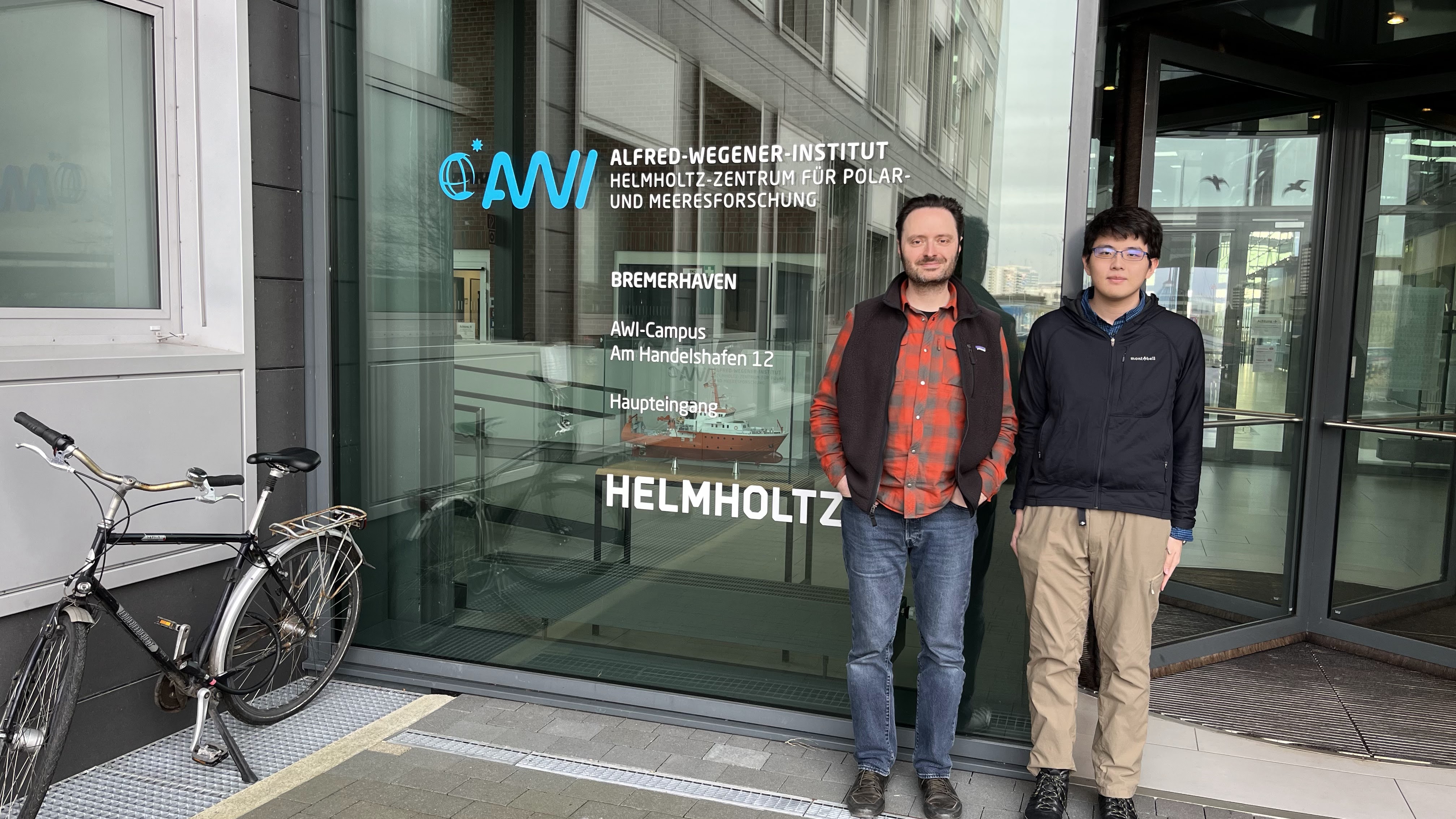
Main Campus of AWI. My host lab was in a small container like the AMS building in AORI, but moved to the main building this Spring.

Port of Bremerhaven taken from AWI

Picture with Prof.Jan Beermann, cited from IGPEES Report.

Last year, I spent three months (late October to mid-February) at the Alfred Wegener Institute for Polar and Marine Research (AWI) in Bremerhaven, Germany. AWI is a renowned institution known for its cutting-edge scientific research in polar regions and its comprehensive environmental studies in the North Sea.

During my first month, I focused on studying oceanography, ocean physics, and the ecosystem. The North Sea's characteristics differ significantly from the oceans surrounding Japan, providing me with a foundational understanding of its unique marine system. For example, the North Sea is a wide, shallow ocean, leading to extensive tidal synchronization. Additionally, I reviewed the characteristics of various biological phyla in detail for my internship work. The differences in ecosystem structures between the North Sea and Japanese waters result in the presence of different species. Although I must refrain from mentioning specific prevalent species due to ongoing research, this month allowed me to gain a deep understanding of the organisms inhabiting the North Sea.

This preparatory period was necessary not only for studying but also, unfortunately, for managing procedures related to residential permits in Germany.

In late November, my experiment began. I joined a research team analyzing the benthic ecosystem of the German Bight, a region of the North Sea. My main task was to extract organisms (unfortunately deceased due to formalin) from sediment samples. Throughout the experiment, I classified these organisms, which deepened my understanding of the North Sea ecosystem. Although examining samples under a stereo microscope was quite tiring, it provided me with valuable experience. This experience strongly motivated me to further my research on benthic organisms and other marine systems.

A better understanding of ecosystems, especially benthic ecosystems, is crucial for comprehending the carbon cycle in which these ecosystems are involved. Benthic organisms, closely associated with sediments, play a key role in the material cycle between soil and water.

I would like to thank Dr. Yokoyama, my host Dr. Jan Beermann, and all the people who helped me during my stay abroad.

 
Bremerhaven's Christmas Market ~~!!!!!

Christmas Market of Bremen. The Old City Hall is registered as a World Heritage.

------------

I was abroad from August last year until the latter half of April this year, receiving various forms of support during my stay. Below are links to reports detailing my experiences in the different locations I visited:

1. UNIS, Longyearbyen, Svalbard, Norway (Aug.2023 - Sep.2023)
→ https://jmsfmml.or.jp/j/activity/hidaka/report_r05_aonuma.pdf [jp]
→https://lams-yokoyama.blogspot.com/2024/08/my-stay-in-unis-university-centre-in.html

2. 7th International Otolith Symposium, Chile (Oct. 2023) 
→ https://lams-yokoyama.blogspot.com/2023/12/blog-post.html 

3. PUCV, Chile (Oct. 2023)
4. AWI, Germany (Oct./Nov. 2023 - Feb.2024)
5. UNIS, Longyearbyen, Svalbard, Norway (Feb.2024 - Mar.2024)
→ https://www.s.u-tokyo.ac.jp/ja/IGPEES/files/report/2023/aonuma.pdf [jp/en]
→https://lams-yokoyama.blogspot.com/2024/08/my-stay-in-awi.html (for AWI)
→https://lams-yokoyama.blogspot.com/2024/08/my-stay-in-unis-university-centre-in.html (for Winter UNIS)

6. EGU General Assembly 2024, Wien, Austria (Apr.2024)
→https://lams-yokoyama.blogspot.com/2024/08/egu2024-short-report.html

These lists are also working for this article's reference ~ Thank you ~

------------

8/14/2024

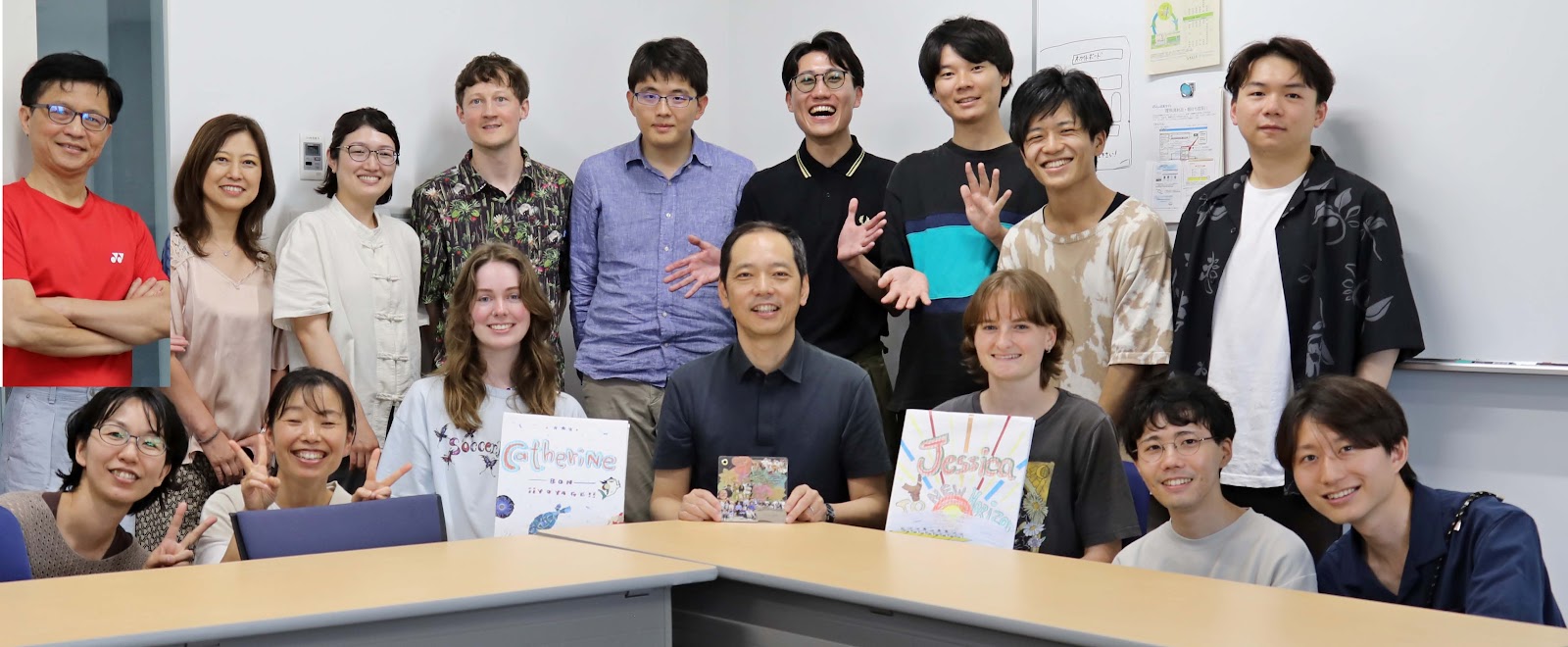
Farewell and Graduation Party for Jessica and Catherine

In June, our lab had the bittersweet pleasure of celebrating the achievements and farewells of Jessica and Catherine, two honors students from the Australian National University. 


Jess and Cat, thank you for your hard work, dedication, and the energy you've brought to our lab. You’ve left an indelible mark on our hearts and our research, and we wish you all the success in your future endeavors. 


As we raise a toast to your graduation, know that you will always have a place in our lab, and we look forward to hearing about your future accomplishments. Congratulations and farewell <3