5/13/2014

2014年 BBQ 春の陣

BBQ隊長、D1平林です。
今年もやってきました、BBQ春の陣!

今回の参加人数はなんと31人!
天候にも恵まれ(まるで夏のような暑さ!)、
にぎやかなBBQ Partyとなりました。

皆様、ご参加くださり、ありがとうございました!

以下、写真です。

BBQの前にAsahiビール工場見学。無料です。
制服を着て記念写真☆

できたてのビールは美味しい!
20分で3杯まで飲めます。

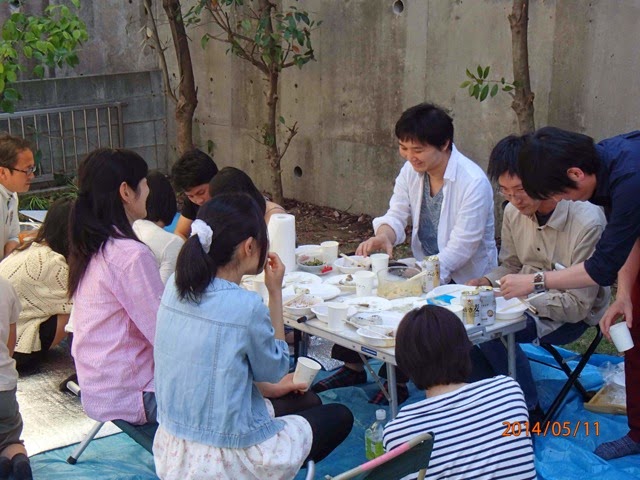
BBQの様子


池田さんによる、絵本の読み聞かせTime

BBQの様子2


次回をお楽しみに!

5/12/2014

New Papers (2014/05/05-2013/05/11)

<ELSEVIER>
Earth and Planetary Science Letters
1. Geomagnetic, cosmogenic and climatic changes across the last geomagnetic reversal from Equatorial Indian Ocean sediments
Jean-Pierre Valet , Franck Bassinot , Alexandra Bouilloux , Didier Bourlès , Sébastien Nomade , Valéry Guillou , Fernand Lopes , Nicolas Thouveny , Fabien Dewilde
10.1016/j.epsl.2014.03.053
reversals, geomagnetic field, beryllium, astrochronology, magnetization

2. Late Glacial to Holocene radiocarbon constraints on North Pacific Intermediate Water ventilation and deglacial atmospheric CO2 sources
Maureen Davies-Walczak , A.C. Mix , J.S. Stoner , J.R. Southon , M. Cheseby , C. Xuan
10.1016/j.epsl.2014.04.004
North Pacific, ventilation, radiocarbon, deglaciation

Global and Planetary Change
3. The Middle-Late Quaternary Fronte Section (Taranto, Italy): An exceptionally preserved marine record of the Last Interglacial
Alessandro Amorosi , Fabrizio Antonioli , Adele Bertini , Stefano Marabini , Giuseppe Mastronuzzi , Paolo Montagna , Alessandra Negri, et al.
10.1016/j.gloplacha.2014.04.007
Last Interglacial, MIS 5e, Quaternary, Sequence stratigraphy, Paleoecology, Taranto, Italy

4. Estimation of greenhouse gases (N2O, CH4 and CO2) from no-till cropland under increased temperature and altered precipitation regime: A DAYCENT model approach
Rashad Rafique , Sandeep Kumar , Yiqi Luo , Xianli Xu , Dejun Li , Wei Zhang , Zaki-ul-Zaman Asam
10.1016/j.gloplacha.2014.05.001
DayCent model, ParameterESTimation (PEST), GHG, Scenario analysis, Altered precipitation, climate warming

Palaeogeography, Palaeoclimatology, Palaeoecology
5.  Mid-to-Late Holocene organic carbon export variability at the southern boundary of the California Current: An approach based on diffuse spectral reflectance of marine sediment cores
Aleix Cortina , Juan Carlos Herguera
10.1016/j.palaeo.2014.04.015
difusse spectral reflectance, organic carbon, California Current System, Holocene, El Niño/PDO

6. Productivity and sea-surface temperature changes recorded during the late Eocene-early Oligocene at DSDP Site 511 (South Atlantic)
Julien Plancq , Emanuela Mattioli , Bernard Pittet , Laurent Simon , Vincent Grossi
10.1016/j.palaeo.2014.04.016
Paleotemperatures, SST, productivity, UK’37, upwelling conditions, Eocene-Oligocene, DSDP Site 511, calcareous nannofossils, lipid-biomarkers

7. Water salinity and productivity recorded by ostracod assemblages and their carbon isotopes since the early Holocene at Lake Qinghai on the northeastern Qinghai-Tibet Plateau, China
Xiangzhong Li , Weiguo Liu
10.1016/j.palaeo.2014.04.017
ostracod, carbon isotope, salinity, lake level, Lake Qinghai

8. Characterization of the last deglacial transition in tropical East Africa: Insights from Lake Albert
Melissa A. Berke , Thomas C. Johnson , Josef P. Werne , Daniel Livingstone , Kliti Grice , Stefan Schouten , Jaap S. Sinninghe Damsté
10.1016/j.palaeo.2014.04.014
African paleoclimate, Sedimentary Molecular Biomarkers, TEX86 paleotemperature, compound specific carbon and hydrogen isotopes, Lake Albert, Deglaciation

9. Re-evaluation and extension of the Marine Isotope Stage 5 tephrostratigraphy of the Faroe Islands Region: The cryptotephra record
P.M. Abbott , W.E.N. Austin , S.M. Davies , N.J.G. Pearce , T.L. Rasmussen , S. Wastegård , J. Brendryen
10.1016/j.palaeo.2014.05.004
volcanic ash, Iceland, marine sequences, isochrones, palaeoclimatic synchronisation

Quaternary Geochronology
10. Pyroxene separation by HF leaching and its impact on helium surface-exposure dating
Gordon R.M. Bromley , Gisela Winckler , Joerg M. Schaefer , Michael R. Kaplan , Kathy J. Licht , Brenda L. Hall
10.1016/j.quageo.2014.04.003
Pyroxene, cosmogenic helium, surface-exposure dating, acid leaching

Quaternary International
11. A Holocene palynological record from the northeastern Laptev Sea and its implications for palaeoenvironmental research
Olga Rudenko , Pavel E. Tarasov , Henning A. Bauch , Ekaterina Taldenkova
10.1016/j.quaint.2014.04.032
Holocene, Palynological record, The Laptev Sea, Palaeoenvironments, Bond events

12. A 48.5-ka climate record from Wulagai Lake in Inner Mongolia, Northeast China
Zhitong Yu , Xingqi Liu , Yong Wang , Zhenqing Chi , Xiujun Wang , Haiyan Lan
10.1016/j.quaint.2014.04.006
Grain Size, Loss on ignition, Wulagai Lake, Inner Mongolia, Asian monsoon, MIS 3

13. Climate changes for the past 52 ka clarified by total organic carbon concentrations and pollen composition in Lake Biwa, Japan
Tomohiko Kigoshi , Fujio Kumon , Ryoma Hayashi , Manato Kuriyama , Kazuyoshi Yamada , Keiji Takemura
10.1016/j.quaint.2014.04.028
Total organic carbon, Modern analogue technique, Paleoclimate, Arctic polar front, Lake Biwa, Late Pleistocene

14. Lithic technological and human behavioral diversity before and during the Late Glacial: A Japanese case study
Kazuki Morisaki , Hiroyuki Sato
10.1016/j.quaint.2014.04.021
Lithic technology, Behavioral diversity, Environmental adaptation, Last Glacial Maximum, Late Glacial, Japan

15. Regional and local changes inferred from lacustrine organic matter deposited between the Late Glacial and mid-Holocene in the Skaliska Basin (north-eastern Poland)
Piotr Kołaczek, Joanna Mirosław-Grabowska, Monika Karpińska-Kołaczek, Renata Stachowicz-Rybka
10.1016/j.quaint.2014.04.024
Organic matter, Palaeobotany, C/N, δ13C,δ15N, Holocene

Quaternary Research
16. Timing of glacier advances and climate in the High Tatra Mountains (Western Carpathians) during the Last Glacial Maximum
Michał Makos , Jan Dzierżek , Jerzy Nitychoruk , Marek Zreda
10.1016/j.yqres.2014.04.001
Cosmogenic 36Cl, Glacier–climate modeling, Paleoclimate, LGM, High Tatra Mountains

17. A relative sea-level history for Arviat, Nunavut, and implications for Laurentide Ice Sheet thickness west of Hudson Bay
Karen M. Simon , Thomas S. James , Donald L. Forbes , Alice M. Telka , Arthur S. Dyke , Joseph A. Henton
10.1016/j.yqres.2014.04.002
Kivalliq, Radiocarbon dating, Uplift rate, Glacial isostatic adjustment, Laurentide Ice Sheet, Tyrrell Sea

18. Millennial-scale variations in western Sierra Nevada precipitation during the last glacial cycle MIS 4/3 transition
Jessica L. Oster , Isabel P. Montañez , Regina Mertz-Kraus , Warren D. Sharp , Greg M. Stock , Howard J. Spero , John Tinsley , James C. Zachos
10.1016/j.yqres.2014.04.010
Speleothem, Sierra Nevada, Dansgaard–Oeschger cycles, MIS 3, MIS 4

Quaternary Science Reviews
19. The transition on North America from the warm humid Pliocene to the glaciated Quaternary traced by eolian dust deposition at a benchmark North Atlantic Ocean drill site
David C. Lang , Ian Bailey , Paul A. Wilson , Christopher J. Beer , Clara T. Bolton , Oliver Friedrich , Cherry Newsam , Megan R. Spencer , Marcus Gutjahr , Gavin L. Foster , Matthew J. Cooper , J. Andrew Milton
10.1016/j.quascirev.2014.04.005
Pliocene, Quaternary, Eolian, Dust, North America, North Atlantic, Laurentide Ice Sheet

20. Chronology of Quaternary coastal aeolianite deposition and the drowned shorelines of southwestern Western Australia – a reappraisal
B.P. Brooke , J.M. Olley , T. Pietsch , P.E. Playford , P.W. Haines , C.V. Murray-Wallace , C.D. Woodroffe
10.1016/j.quascirev.2014.04.007
Optically Stimulated Luminescence, OSL, Coastal evolution, Marine carbonate sediment; Eolianite, Pleistocene sea levels, Tamala Limestone, Aeolianite

21. Mid- to Late-Holocene Australian–Indonesian summer monsoon variability
Stephan Steinke , Mahyar Mohtadi , Matthias Prange , Vidya Varma , Daniela Pittauerova , Helmut W. Fischer
10.1016/j.quascirev.2014.04.006
Australian–Indonesian summer monsoon, Holocene, Orbital forcing, Solar forcing, Grand solar minimum

22. Climate and environments during Marine Isotope Stage 11 in the central Iberian Peninsula: the herpetofaunal assemblage from the Acheulean site of Áridos-1, Madrid
Hugues-Alexandre Blain , Manuel Santonja , Alfredo Pérez-González , Joaquin Panera , Susana Rubio-Jara
10.1016/j.quascirev.2014.04.009
Herpetofauna, Middle Pleistocene, Acheulean, Marine Isotope Stage 11, Western Mediterranean, Spain

23. Deciphering patterns of postglacial sea level at the junction of the Laurentide and Innuitian Ice Sheets, western Canadian High Arctic
F. Chantel Nixon , John H. England , Patrick Lajeunesse , Michelle A. Hanson
10.1016/j.quascirev.2013.07.005
Relative sea-level, Western Canadian High Arctic, Holocene, Laurentide Ice Sheet, Innuitian Ice Sheet, Hiatella arctica, Driftwood, Radiocarbon chronology

24. Controls on detrital sedimentation in the Cariaco Basin during the last climatic cycle: insight from clay minerals
A. Riboulleau , V. Bout-Roumazeilles , N. Tribovillard
10.1016/j.quascirev.2014.04.023
Cariaco Basin, Clay minerals, ITCZ, Eemian, Younger Dryas, Detrital sedimentation

Chemical Geology
Geochimica et Cosmochimica Acta
Nothing relevant

Marine Geology
Non-updated

5/06/2014

新着論文(AGU, EGUほか)(28 April - 4 May 2014)

○G3
Rhizon sampler alteration of deep ocean sediment interstitial water samples, as indicated by chloride concentration and oxygen and hydrogen isotopes
Madeline D. Miller, Jess F. Adkins, David A. Hodell
堆積物中の間隙水を採取するための方法を比較。新たなRhizons方式は従来法に比べて[Cl]とδ18Oともにバイアスがかかっていることを指摘。

○GRL
20th Century sea ice trends in the Ross Sea from a high resolution, coastal ice core record
Kate E. Sinclair, Nancy A.N. Bertler, Melissa M. Bowen, Kevin R. Arrigo 

The two types of El-Nino and their impacts on the Length-of-day
O. Viron, J. O. Dickey

To what extent can interannual CO2 variability constrain carbon cycle sensitivity to climate change in CMIP5 Earth System Models?
Jun Wang, Ning Zeng, Yimin Liu, Qing Bao
陸上炭素が大気中CO2濃度変動に与える役割に着目してCMIP5のモデル結果を解析したところ、正のフィードバックによって熱帯域の温暖化がCO2のさらなる放出へと繋がっていることが示唆。ただしモデルは観測よりもフィードバックプロセスを過大評価する傾向があることが確認された。

Climate variability features of the last interglacial in the East Antarctic EPICA Dome C ice core
K. Pol, V. Masson-Delmotte, O. Cattani, M. Debret, S. Falourd, J. Jouzel, A. Landais, B. Minster, M. Mudelsee, M. Schulz, B. Stenni
間氷期には千年スケールの気候変動があることが完新世においては広く知られているが、それより以前の間氷期には高解像度の記録が乏しいことからよく分かっていない。南極Dome Cアイスコアから得られた気温指標(δD)から、MIS5において短周期の変動が確認された。特にMIS11において確認されていたように、他の間氷期でも氷河化(glacial inception)に向かう以前には特に大きな変動が見られた。またMIS5の変動は完新世のそれよりも振幅が大きく、温暖な状態で東南極氷床が大きく変動していた可能性が示唆される。

Isolating the Anthropogenic Component of Arctic Warming
Petr Chylek, Nicholas Hengartner, Glen Lesins, James D. Klett, Ole Humlum, Marcia Wyatt, Manvendra K. Dubey

Tropical influence independent of ENSO on the austral summer Southern Annular Mode
Hui Ding, Richard J. Greatbatch, Gereon Gollan

Similarity of organized patterns in driving and basal stresses of Antarctic and Greenland ice sheets beneath extensive areas of basal sliding
O.V. Sergienko, T. T. Creyts, R. C. A. Hindmarsh

○JGR-Oceans
Relationships between total alkalinity in surface water and sea surface dynamic height in the Pacific Ocean
Yusuke Takatani, Kazutaka Enyo, Yosuke Iida, Atsushi Kojima, Toshiya Nakano, Daisuke Sasano, Naohiro Kosugi, Takashi Midorikawa, Toru Suzuki, Masao Ishii
海洋表層水のアルカリ度は温度と塩分で近似できることが知られるが、北太平洋においてはその限りではない。塩分と海面高度(sea surface dynamic height )で経験的に近似できることを提案。

Trends in Southern Hemisphere wind-driven circulation in CMIP5 models over the 21st century: Ozone recovery versus greenhouse forcing
Guojian Wang, Wenju Cai, Ariaan Purich
近年南極オゾン層の現象が南半球の大気・海洋循環を変化させていることが知られているが、今後オゾン層が回復し、温室効果が増強する中で循環場がどのように変化するかはよく分かっていない。CMIP5によるRCP4.5と8.5に基づいた予測結果を解析したところ、特にRCP8.5に基づいた2050年以降の未来においては循環場が大きく変化することが示唆された。

○Paleoceanography
Holocene tropical Western Indian Ocean sea surface temperatures in covariation with climatic changes in the Indonesian region
Henning Kuhnert, Holger Kuhlmann, Mahyar Mohtadi, Helge Meggers, Karl-Heinz Baumann, Jürgen Pätzold

Comparison of 240 ka-long organic carbon and carbonate records along a depth transect in the Timor Sea: Primary signals versus preservation changes
Wei Liu, François Baudin, Eva Moreno, Fabien Dewilde, Nicolas Caillon, Nianqiao Fang, Franck Bassinot

The spread of marine anoxia on the Northern Tethys margin during the Paleocene-Eocene Thermal Maximum
Alexander J. Dickson, Rhian L. Rees-Owen, Christian März, Angela L. Coe, Anthony S. Cohen, Richard D. Pancost, Kyle Taylor, Ekaterina Shcherbinina

Using the natural spatial pattern of marine productivity in the Subarctic North Pacific to evaluate paleoproductivity proxies
Sascha Serno, Gisela Winckler, Robert F. Anderson, Christopher T. Hayes, Haojia Ren, Rainer Gersonde, Gerald H. Haug

○GBC
特になし

○Climate of the Past
Blue intensity and density from northern Fennoscandian tree rings, exploring the potential to improve summer temperature reconstructions with earlywood information
J. A. Björklund, B. E. Gunnarson, K. Seftigen, J. Esper, and H. W. Linderholm

Temperature reconstruction from 10 to 120 kyr b2k from the NGRIP ice core
P. Kindler, M. Guillevic, M. Baumgartner, J. Schwander, A. Landais, M. Leuenberger, R. Spahni, E. Capron, and J. Chappellaz

NGRIP CH4 concentration from 120 to 10 kyr before present and its relation to a δ15N temperature reconstruction from the same ice core
M. Baumgartner, P. Kindler, O. Eicher, G. Floch, A. Schilt, J. Schwander, R. Spahni, E. Capron, J. Chappellaz, M. Leuenberger, H. Fischer, and T. F. Stocker

○Biogeosciences
特になし

○GSA Bulletin
Latest Permian paleosols from Wapadsberg Pass, South Africa: Implications for Changhsingian climate
Robert A. Gastaldo, Cassandra L. Knight, Johann Neveling, and Neil J. Tabor

Numerical constraints on degassing of metamorphic CO2 during the Neoproterozoic Franklin large igneous event, Arctic Canada
Peter I. Nabelek, Jean H. Bédard, and Robert H. Rainbird

Ice dams, outburst floods, and glacial incision at the western margin of the Tibetan Plateau: A >100 k.y. chronology from the Shyok Valley, Karakoram
Dirk Scherler, Henry Munack, Jürgen Mey, Patricia Eugster, Hella Wittmann, Alexandru T. Codilean, Peter Kubik, and Manfred R. Strecker

Quantifying sediment supply at the end of the last glaciation: Dynamic reconstruction of an alpine debris-flow fan
Sara Savi, Kevin P. Norton, Vincenzo Picotti, Naki Akçar, Romain Delunel, Francesco Brardinoni, Peter Kubik, and Fritz Schlunegger
Journal Review 9 – 6 May 2014 (Nature, Science, Nature Geoscience)

NATURE
1. No magic fix for carbon
Nature 509, 7 (01 May 2014) doi: 10.1038/509007a

Carbon sequestration has been seen as a viable option in reducing anthropogenic carbon input into the atmosphere by many policymakers. However, a lot of work needs to be done in order to ensure it works to keep carbon stored in the long term.

2. Conservation: Former Iron Curtain safeguards wildlife
Bernhard Jank & Johannes Rath
Nature 509, 33 (01 May 2014) doi: 10.1038/509033d

New, unstable countries do not protect biodiversity and habitat as well as nations that have strong governance structures. Conservation efforts in regions with a history of strife should seek to emulate the European Green Belt, which has been converting former cold-war territory into protected reserves.

3. North Atlantic forcing of tropical Indian Ocean climate
Mahyar Mohtadi, Matthias Prange, Delia W. Oppo, Ricardo de Pol-Holz, Ute Merkel, Xiao Zhang, Stephan Steinke & Andreas Luckge
Nature 509, 76-80 (01 May 2014) doi: 10.1038/13196

Mohtadi et al. show that slowdowns of the Atlantic meridional overturning circulation during Heinrich stadials and the Younger Dryas stadial affected the tropical Indian Ocean hydroclimate through changes to the Hadley circulation including a southward shift in the rising branch and an overall weakening over the southern Indian Ocean. They use high-resolution sea surface temperature and seawater oxygen isotope records of sedimentary archives from the tropical eastern Indian Ocean for the past 45 000 years, combined with climate model simulations of Atlantic circulation slowdown under Marine Isotope Stages 2 and 3 boundary conditions, in order to do this.

4. Electrical conductivity during incipient melting in the oceanic low-velocity zone
David Sifre, Emmanuel Cardes, Malcolm massuyeau, Leila Hashim, Saswata Hier-Majumder & Fabrice Gaillard
Nature 509, 81-85 (01 May 2014) doi: 10.1038/nature13245

Sifre et al. calculated conductivity profiles across the asthenosphere for various tectonic plate ages to determine the electrical conductivity of carbon-dioxide-rich and water-rich melts. Several electrical discontinuities are predicted and match geophysical observations.


SCIENCE
5. Drones Flying High as New Tool for Field Biologists
Richard Schiffman
Vol. 344 no. 6183 p. 459 doi:10.1126/science.344.6183.459

Field biologists are using drones, also known as unmanned aerial vehicles (UAVs), to track and manage wildlife. These also act well as deterrents against poachers.

6. Seafloor Mining Plan Advances, Worrying Critics
Carolyn Gramling
Vol. 344 no. 6183 p. 463 doi: 10.1126/science.344.6183.463

The first ever commercial deep-sea mine may begin operating in 2016, raising issues about its long-term effects on marine ecosystems.

7. Tolerance for Predatory Wildlife
Adrian Treves, Jeremy Bruskotter
Vol. 344 no. 6183 pp. 476-477 doi: 10.1126/science.1252690

Promoting human tolerance is critical to success of predator conservation efforts. Economic incentives may help, but social factors play a large part as well.

8. Planetary Science: Forming Terrestrial Planets
John Chambers
Vol. 344 no. 6183 pp. 479-480 doi: 10.1126/science.1252257

Izidoro et al. has created a simulation model which accounts for Mars’ stunted growth as compared with the other terrestrial planet. The planet was modeled to form around 1 AU and was gravitationally scattered into the depleted region of the solar nebula, where the reduction of planestesimals near its current orbit caused its small size.

9. Multiple Dimensions of Climate Change and Their Implications for Biodiversity
Raquel A. Garcia, Mar Cabeza, Carsten Rahbek, Miguel B. Araujo
Vol. 344 no. 6183 doi: 10.1126/science.1247579

Raquel et al. analysed different measurements of climate change and linked the metrics to their implications on biodiversity by creating a conceptual framework that classifies them into common currencies of threat and opportunity.

10. Faster Decomposition Under Increased Atmospheric CO­­2 Limits Soil Carbon Storage
Kees Jan van Groenigen, Xuan Qi, Craig W. Osenberg, Yiqi Luo, Bruce A. Hungate
Vol. 344 no. 6183 pp. 508-509 doi: 10.1126/science.1249534

Rising atmospheric CO2 is expected to stimulate plant growth and soil C input but may also alter microbrial decomposition. Groenigen et al. show that atmospheric CO­2 enrichment results in lower equilibrium soil C stocks than expected from the rise in soil C input alone, indicating a general mechanism limits C accumulation in soil.

NATURE GEOSCIENCE
11. Biogeochemistry: Lake carbon
Anna Armstrong
Nature Geoscience 7, 328 (2014) doi: 10.1038/ngeo2159
Glob. Change Biol. http://doi.org/r85 (2014)

A positive correlation between lake carbon burial and phosphorus levels indicates that lake eutrophication may cause an increase in carbon burial. If the burial rates collected by Anderson et al. from 90 European lowland lakes apply to other European lakes, the sum total of sequestered carbon may be more than previously thought.

12. Climate change: Walker uncertainty
Alicia Newton
Nature Geoscience 7, 328 (2014) doi: 10.1038/ngeo2160
Clim. Dyn. http://doi.org/r86 (2014)

Recent observations show the Walker atmospheric circulation cell strengthening and shifting to the west instead of weakening and moving eastwards as forecasted. This behaviour may be the result of the recent predominance of La-Niña-like conditions in the Pacific region.

13. Geochemistry: A piece of the deep carbon puzzle
Craig E. Manning
Nature Geoscience 7, 333-334 (2014) doi: 10.1038/ngeo2152

Ague and Nicolescu show that significant amounts of carbonate minerals are dissolved from subducting slabs by infiltrating fluids, aiding the transfer of carbon back to Earth’s surface. This may balance carbon dioxide emissions at arc volcanoes, which was previously thought to be much more than the carbon loss from subducting slabs.

14. Climate warming during Antarctic ice sheet expansion at the Middle Miocene transition
Gregor Knorr & Gerrit Lohmann
Nature Geoscience 7, 376-381 (2014) doi: 10.1038/ngeo2119

The authors use a coupled atmosphere-ocean model to assess the relative effects of changes in atmospheric CO2 concentration and ice sheet growth on regional and global temperatures during the Middle Miocene climate transition. Paradoxically, the expansion of the ice sheet occurred while the surface waters of the Southern Ocean were warming. The simulations showed the changes were due to a complex interplay between wind field, ocean circulation and the sea-ice system.

15. Carbon sequestration during the Palaeocene-Eocene Thermal Maximum by an efficient biological pump
Zhongwu Ma, Ellen Gray, Ellen Thomas, Brandon Murphy, James Zachos & Adina Paytan
Nature Geoscience 7, 382-388 (2014) doi: 10.1038/ngeo2139

Ma et al. present records of marine barite accumulation rates that show distinct peaks during the PETM, suggesting a general increase in oceanic export productivity. They propose that changes in marine ecosystems, resulting from high atmospheric partial pressure of CO­2 and ocean acidification, led to enhanced carbon export from the photic zone to depth, thereby increasing the efficiency of the biological pump.

5/02/2014

New Paper Review(2014/4/21~2014/4/29) AGU

◉JGR Atomospheres
1. Modulation of Monsoon Intraseasonal Oscillations in the Recent Warming Period
C. T. Sabeerali1, Suryachandra A Rao1, Gibies George1, D. Nagarjuna Rao1,*, S. Mahapatra1, A. Kulkarni1 andRaghu Murtugudde2
DOI: 10.1002/2013JD021261

◉Climate of the Past
2. What controls deuterium excess in global precipitation?
S. Pfahl and H. Sodemann
doi:10.5194/cp-10-771-2014

3. Geochronological reconsideration of the eastern European key loess section at Stayky in Ukraine
A. Kadereit and G. A. Wagner
doi:10.5194/cp-10-783-2014

4. A probabilistic model of chronological errors in layer-counted climate proxies: applications to annually banded coral archives
M. Comboul, J. Emile-Geay, M. N. Evans, N. Mirnateghi, K. M. Cobb, and D. M. Thompson
doi:10.5194/cp-10-825-2014

◉G-cubed
5. Palaeomagnetic recording fidelity of non-ideal magnetic systems
Adrian R. Muxworthy1,*, David Krása2, Wyn Williams3 andTrevor P. Almeida1
DOI: 10.1002/2014GC005249

6. Paleomagnetism of Eocene and Miocene sediments from the Qaidam basin: Implication for no integral rotation since the Eocene and a rigid Qaidam block
Xiangjiang Yu1, Suotang Fu2, Shuwei Guan3, Baochun Huang1, Feng Cheng1, Xiang Cheng1, Tuo Zhang4 andZhaojie Guo1,*
DOI: 10.1002/2014GC005230

◉GRL
7. Imprint of long-term solar signal in groundwater recharge fluctuation rates from North West China.
R.K. Tiwari1,* andRekapalli Rajesh2
DOI: 10.1002/2014GL060204

◉Paleoceanography
8. Holocene tropical Western Indian Ocean sea surface temperatures in covariation with climatic changes in the Indonesian region
Henning Kuhnert1,*, Holger Kuhlmann1, Mahyar Mohtadi1, Helge Meggers1,2, Karl-Heinz Baumann3 andJürgen Pätzold3

DOI: 10.1002/2013PA002555