12/11/2012

新着論文(ELSEVIER) 2012/12/11


Marine Geology
Volumes 332–334, Pages 1-234 (1 December 2012)
Hydrocarbon leakage through focused fluid flow systems in continental margins
Edited by Zahie Anka, Christian Berndt and Aurélien Gay

1, Characterization of microbial activity in pockmark fields of the SW-Barents Sea
Julia C. Nickel, Rolando di Primio, Kai Mangelsdorf, Daniel Stoddart, Jens Kallmeyer
→pockmark, Barents Sea, sulfate reduction, microbial activity, Loppa High

2, Methane-Derived Authigenic Carbonates (MDAC) in northern-central Adriatic Sea: Relationships between reservoir and methane seepages
Rossella Capozzi, Francesco L. Guido, Davide Oppo, Giovanni Gabbianelli
→Adriatic Sea, methane seepage, Methane-Derived Authigenic Carbonates, reservoir

Earth and Planetary Science Letters
Volumes 359–360, Pages 1-294 (15 December 2012)
3, Long-term low latitude cosmogenic 3He production rate determined from a 126 ka basalt from Fogo, Cape Verdes
Jurgen P.T. Foeken, Finlay M. Stuart, Darren F. Mark
→cosmogenic nuclide dating, basalt lava flow, scaling, latitude, geomagnetic field variation

4, Bomb fall-out 236U as a global oceanic tracer using an annually resolved coral core
Stephan R. Winkler, Peter Steier, Jessica Carilli
→oceanic tracer, 2386U, coral, AMS, fallout

5, Glacial isostatic adjustment constrains dehydration stiffening beneath Iceland
Peter Schmidt, Björn Lund, Thóra Árnadóttir, Harro Schmeling
→glacial isostatic rebound, Iceland, dehydration stiffening, rheology, viscosity


6, Predicting radar attenuation within the Antarctic ice sheet
Kenichi Matsuoka, Joseph A. MacGregor, Frank Pattyn
→Antarctic ice Sheet , radar remote sensing, englacial attenuation, subglacial environment, thermo-mechanical modeling

7, Re–Os geochronology of the lacustrine Green River Formation: Insights into direct depositional dating of lacustrine successions, Re–Os systematics and paleocontinental weathering
Vivien M. Cumming, David Selby, Paul G. Lillis
→re-Os geochronology, lacustrine, Green River Formation, Uinta basin, Osmium

新着論文(AGU, EGUほか)2012.12.3 - 9


☆AGU★ 
○G3
特になし

○GRL
特になし

○JGR-Oceans
Mechanisms for variable North Atlantic–Nordic seas exchanges
A. B. Sandø, J. E. Ø. Nilsen, T. Eldevik and M. Bentsen

○Paleoceanography
今回はなし

☆EGU★
○Climate of the Past
Vegetation dynamics in the Northeastern Mediterranean region during the past 23 000 yr: insights from a new pollen record from the Sea of Marmara
V. Valsecchi, M. F. Sanchez Goñi, and L. Londeix
地中海東部(Sea of Marmara)で得られた堆積物コア中の花粉分析から過去23kaの環境変動と植生変動を復元。HS1、B/A、YDに対応した変動パターンが見られた。また完新世の5.5ka、2.1kaには森林が大きく後退していた。地中海東部の森林は北大西洋やシベリア高気圧に強く影響されていると考えられる。

Pollen-based reconstruction of Holocene vegetation and climate in southern Italy: the case of Lago Trifoglietti
S. Joannin, E. Brugiapaglia, J.-L. de Beaulieu, L. Bernardo, M. Magny, O. Peyron, S. Goring, and B. Vannière

An ocean–ice coupled response during the last glacial: a view from a marine isotopic stage 3 record south of the Faeroe Shetland Gateway
J. Zumaque, F. Eynaud, S. Zaragosi, F. Marret, K. M. Matsuzaki, C. Kissel, D. M. Roche, B. Malaizé, E. Michel, I. Billy, T. Richter, and E. Palis

○Biogeosciences
Ocean acidification limits temperature-induced poleward expansion of coral habitats around Japan
Y. Yara, M. Vogt, M. Fujii, H. Yamano, C. Hauri, M. Steinacher, N. Gruber, and Y. Yamanaka
4つの気候モデルを用いて日本周辺における熱帯-亜熱帯サンゴの生息域が将来の温暖化と海洋酸性化によってどのように変化するかを予測。IPCCのbusiness as usual排出シナリオでは、今世紀末には数百キロ北上すると考えられる。白化現象と炭酸塩の飽和度低下によってサンゴの生息できる環境は2020年〜2030年には半分ほどになり、2030-2040年には消失すると予想される。ただし、サンゴの適応や生息地の早い移動などを考慮できていないため、大げさに見積もっている可能性が高い。

Nitrous oxide dynamics in low oxygen regions of the Pacific: insights from the MEMENTO database
L. M. Zamora, A. Oschlies, H. W. Bange, K. B. Huebert, J. D. Craig, A. Kock, and C. R. Löscher
赤道太平洋は世界でも最大のN2Oの放出源の一つである。将来赤道東太平洋の酸素極小層は拡大すると予想されているが、それに伴って窒素循環がどのように変化するかはよく分かっていない。モデルシミュレーションから、N2OはO2の減少に対して指数関数的にではなく、線形的に増加すると予想される。そのため、従来の研究はN2Oの増加を過大評価している可能性があるという。

☆GSA★
○GSA Bulletin
今回はなし

12/10/2012

新着論文(ELSEVIER 2012/11/26-12/2)


Palaeogeography, Palaeoclimatology, Palaeoecology
Time-Specific Facies: the color and texture of biotic events 特集

Chemical Geology
1. Paleoproductivity and paleoredox conditions during late Pleistocene accumulation of laminated diatom mats in the tropical West Pacific
Zhifang Xiong, Tiegang Li, Thomas Algeo, Qingyun Nan, Bin Zhai, Bo Lu

► LDM was deposited under sulfidic–anoxic conditions with suboxic bottom waters. ► BSR occurred in an open, sulfate-unlimited system. ► Pyrite formation was limited by organic matter rather than reactive Fe. ► Elevated export productivity rather than later ventilation resulted in reducing conditions during LDM formation. ► Sediment lamination as an indicator of anoxic bottom water conditions must be approached cautiously.

2. Using the 87Sr/86Sr of modern and paleoseep carbonates from northern Cascadia to link modern fluid flow to the past
C. Joseph, M.E. Torres, R.A. Martin, B.A. Haley, J.W. Pohlman, M. Riedel, K. Rose

►87Sr/86Sr depletion in pore fluids and carbonates near seafloor at Barkley Canyon ► Similar87Sr/86Sr depletion identified in fluids/carbonates in an uncomformity 190mbsf at U1329 ►87Sr/86Sr depletion corresponds with Mn/Ca and δ13C enrichment, δ18O depletion to −12‰. ► Uplifted paleoseep carbonates have similar signal to Barkley Canyon, U1329 fluids and carbonates. ► Infer that fluids from our offshore sites are similar to fluids that sourced Oligocene paleoseeps

3. Brachiopods recording seawater temperature—A matter of class or maturation?
Maggie Cusack, Alberto Pérez Huerta, EIMF

► Secondary (S) layer fibres closest to primary (P) layer are isotopically light. ► Oxygen isotopic equilibrium is indicated by grey box. ► Oxygen isotopic equilibrium is achieved in innermost fibres of secondary (S) layer. ► δ18O of mature shell innermost fibres is an accurate seawater temperature proxy.

4. Accurate and precise quantification of major and trace element compositions of calcic–sodic fluid inclusions by combined microthermometry and LA-ICPMS analysis
Tobias U. Schlegel, Markus Wälle, Mathew Steele-MacInnis, Christoph A. Heinrich

► Na–Ca-dominated fluid inclusions (FI) determined by microthermometry and LA-ICPMS. ► Two melting temperatures are measured in each FI, to yield true NaCl concentration. ► Improved accuracy of LA-ICPMS analysis of FI containing CaCl2as major component ► CaCl2concentration in FI is more precisely found by microthermometry than LA-ICPMS. ► Accurate determination of Ca-conc. in FI hosted within Ca-bearing host minerals

5. Neodymium isotopic compositions of the standard monazites used in UThPb geochronology
Zhi-Chao Liu, Fu-Yuan Wu, Yue-Heng Yang, Jin-Hui Yang, Simon A. Wilde

► A technique for simultaneous determination of UThPb ages and SmNd isotopes. ► Twelve standard monazites and four natural samples were analyzed. ► Manangoutry and Namaqualand are fairly homogeneous in SmNd isotopic compositions. ► They are potential standards for simultaneous UPb age and SmNd isotopic analyses.

12/05/2012

同位体比部会@秋保温泉

M1の平林です。
11月21日~23日まで、質量分析学会の同位体比部会に参加してきました。
 この学会発表が、修士に入って初めての発表だったので、大変緊張しました…

今回の学会会場は仙台の秋保温泉で行われました。

会場となった秋保温泉「伝承千年の宿 佐勘」
仙台藩主伊達家の湯浴み御殿として栄えたゆかりの宿だそうで、
温泉がとても気持ち良かったです!

温泉好きな先生が多かったようで、夕御飯の後にはYukata Sessionもあるほど…!
お昼から浴衣を着て発表を聞いている先生方も多く見受けられました。

私は8月から手法開発を行ってきた
超微量炭酸塩試料中の放射性炭素濃度測定について、
ポスター発表をしました。
普段14Cの研究をしていない研究者の方もたくさん聞きに来てくださり、
議論したり、手法開発についてのアドバイスをいただいたりと、大変有意義でした。
今回の発表内容は、まだ開発途中のものだったので、
来年は自分のサンゴサンプルを用いて出た結果を発表できるように
頑張りたいと思います!


夕御飯もとても豪華でした。
食べても食べても新しい料理が出てくる出てくる!
温泉も食も満喫した学会でした。

12/04/2012

牛深出張


M1の平林です。
ブログにアップするのが遅くなってしまいましたが、
10月末の熊本県の牛深への出張についてご報告させていただきます!

牛深海中公園の様子。とても穏やかな海でした。

出張期間は10月31日〜11月3日、
私が分析している牛深サンゴを採取してくださった、
九州大学の野島哲先生をご訪問させていただきました。
九州大学附属天草臨海実験所も伺うことができ、
サンゴ飼育実験やハゼの水槽実験、ハゼの生態についてのお話など、
興味深いお話をたくさんお聞きできました。


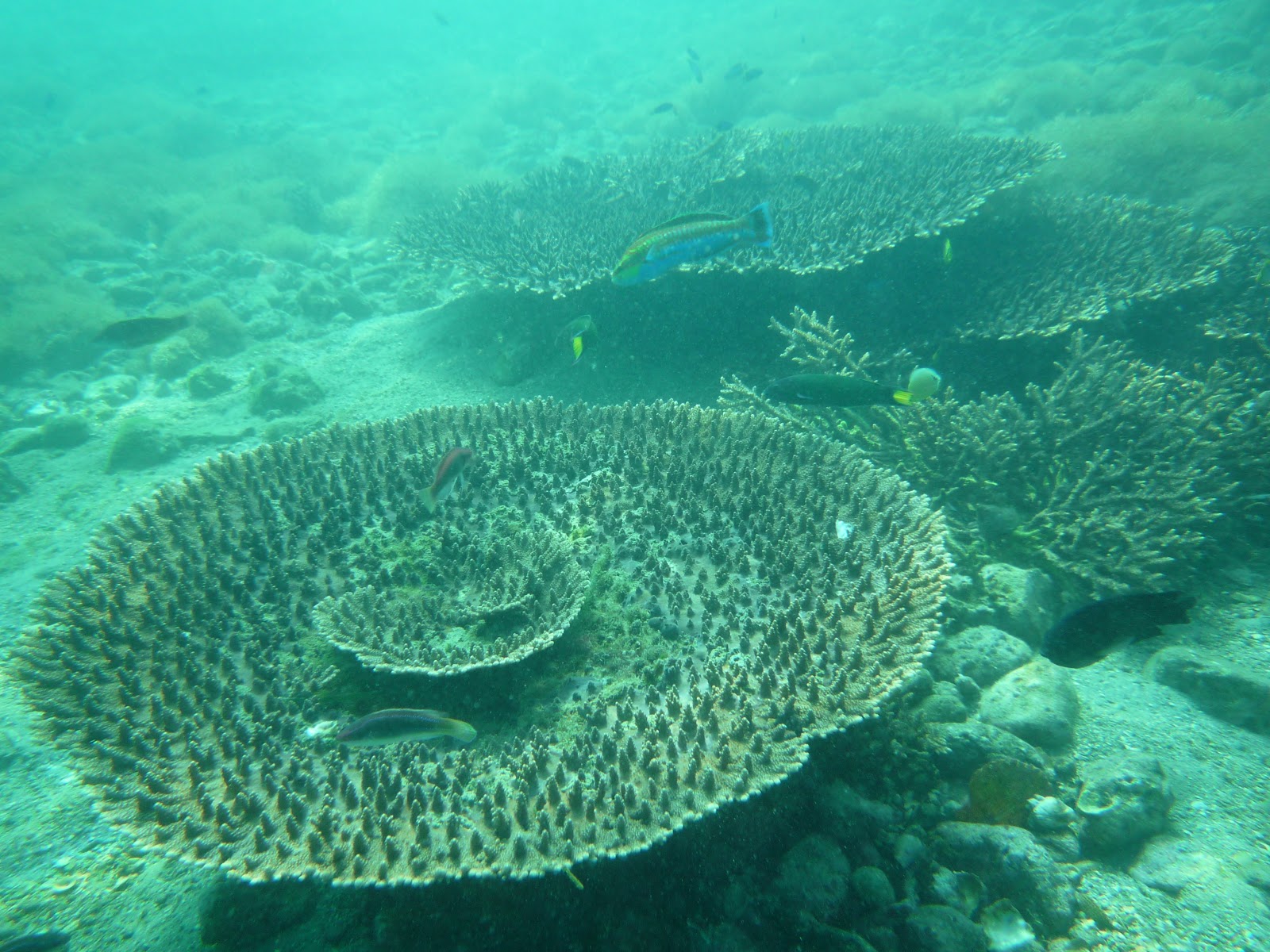
牛深のサンゴ礁の様子。
熊本県にこんなに大きなサンゴ礁があるとは思っていませんでした!

また、九州大学の野島先生の他に、産総研の鈴木淳さん、琉球大の井口亮さんの
ご協力のもと、新しくサンゴのサンプリングもさせていただくことができました!
海はとても穏やかで、シュノーケルでも十分サンゴ礁の様子が見えるほど、
透明度は高かったです。水温も23℃前後と思ったほど寒くありませんでした。


採取したサンゴ。熱帯域のハマサンゴとは違ってBumpyなのが特徴。
分析するのが楽しみです!

民宿で毎晩出てくる、新鮮でおいしいお刺身!
食べきれないほどたくさんいただきました!
今回の牛深サンゴサンプリングにご協力いただいた皆様と
ご飯の前に記念写真をとらせていただきました。
ご飯の間、貴重なサンゴについてのお話もお聞きすることが出来ました。

短い期間でしたが、貴重なお話をたくさんお聞きすることができ、
何よりはじめて自分のサンゴのサンプリングもすることができたので、
大変充実した出張だったと思います!

採取したサンゴを分析するのが楽しみです。
ご協力していただいた皆様、本当にありがとうございました!